
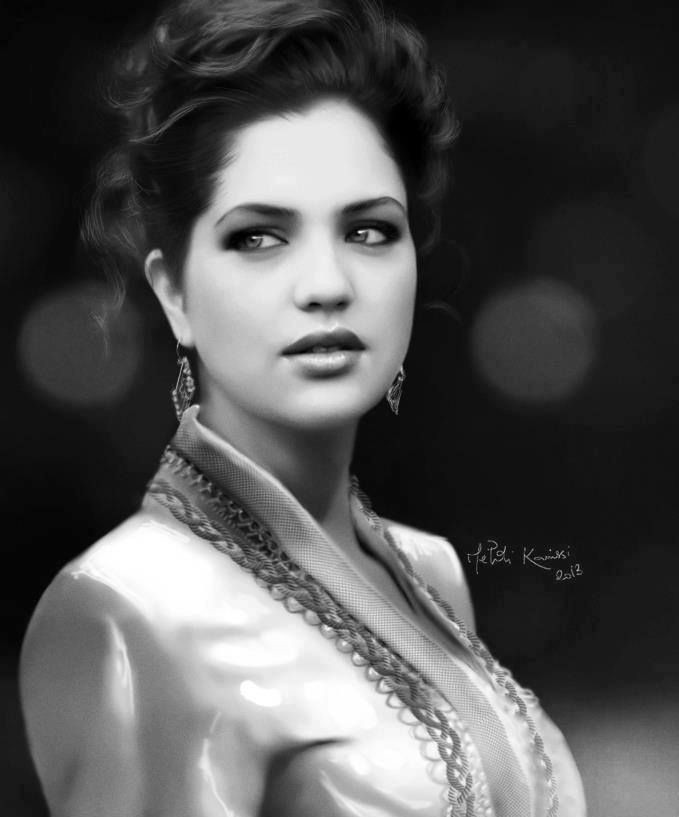
Lalla Soukaina is the niece of King Mohammed VI and the first granddaughter of the late Hassan II. Discreta and rare in her appearances, she has inadvertently become one of the most influential figures in traditional Moroccan fashion. Every kaftan or takchita she wears triggers an immediate craze. Portrait of a silent princess, icon of an elegance that speaks for itself.
Who is Princess Lalla Soukaina?
She didn’t seek the spotlight. In a world where royal visibility is often cultivated, Lalla Soukaina chose the opposite path. She has a few well-documented public appearances to her name, and it is precisely this rarity that creates the effect.
In 2000, she accompanied her mother and brother on King Mohammed VI's first official visit to Spain. In November 2004, she was in Jordan at the Arab Women's Summit. In January 2008, a trip to Thailand with her brother. Each time, photographed, then disappeared.
Why do his appearances spark such a craze?

It's not just a matter of beauty. It's a matter of correctness. She respects the codes of royal protocol while wearing them with natural modernity. Sylvie Richoux, director of Casa Moda Academy, describes her style as the pinnacle of Moroccan haute couture, with the exact balance between ostentation and refinement.
She doesn't overact. She doesn't pose. She appears, and that appearance is enough. That's precisely why it works, and why her influence on traditional fashion lasts well beyond each appearance.
Studies between Paris, Assas, and the United States
It is not insignificant that she honed her gaze in Paris, the world capital of fashion. And it is Moroccan fashion that she chose to wear. This crossing between Western culture and attachment to traditions creates exactly the type of elegance she embodies – modern in essence, traditional in form.
Her mother, Lalla Meryem, is also known for her sense of style and her attachment to traditional outfits. The legacy has clearly been passed down.
Monaco's Royal Wedding: The Appearance That Launched Her Internationally
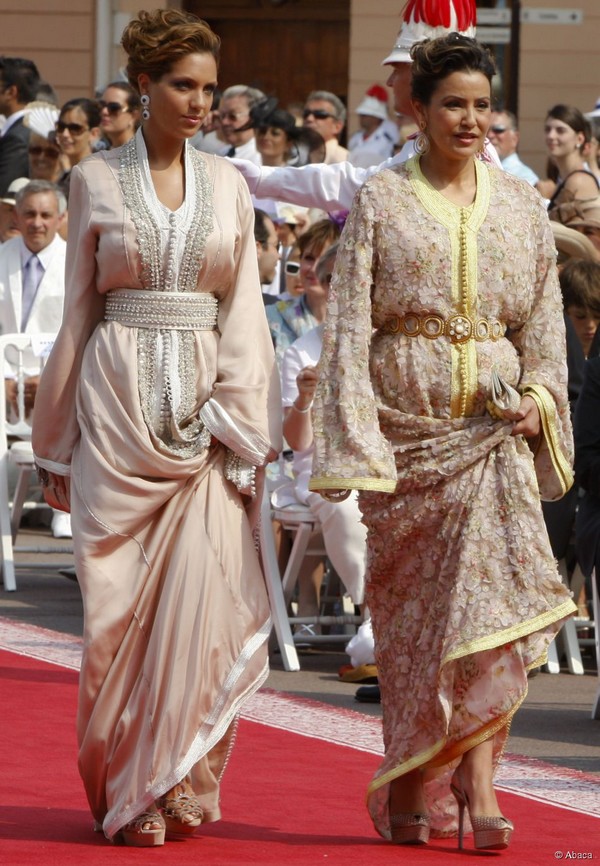
This moment illustrates something deeper: traditional Moroccan fashion has nothing to envy from major Western houses. It simply needs to be worn with the right presence. Lalla Soukaina proved it that evening.
The Royal Family and Traditional Fashion: An Ambassadorial Role

In this family photo, the Moroccan royal family is gathered in traditional attire. King Mohammed VI is wearing a kaftan Men's clear and understated, her son in a white jabador, and the princesses in embroidered takchitas, in the cream and gold tones of grand ceremonies.
The royal family is often seen dressed in Moroccan attire, whether during religious holidays, mariages, or special occasions. These appearances keep traditional clothing alive and in the spotlight, far beyond mere nostalgia.
They also inspire an entire country. A color, a style, or some embroidery spotted on a member of the royal family quickly becomes a trend that pops up in mariages and boutiques. The jabador man, for his part, remains the quintessential men's ceremonial attire, worn for Friday prayers or for the’Eid.
Married in 2014: an intimate ceremony, stunning outfits

On the cover of ¡HOLA! Morocco are two photos from Lalla Soukaina’s wedding. In the larger photo, King Mohammed VI, wearing a pistachio-green djellaba, is pictured with the bride and the princesses of the royal family. In the second, smaller photo, Lalla Soukaina poses with her husband; she is wearing a traditional wedding gown, while he is wearing djellaba White and fez.
For one Moroccan wedding, the choice of outfits is a message in itself. The bride does not just wear clothes; she carries the story of a family, a rank, a culture. Lalla Soukaina wore her traditional outfits with a natural ease that belongs only to those who grew up with these codes.
Elegant in her everyday life, she was magnificent as a bride. No overdoing it, just the right outfit, worn by the right person, at the right time.
Frequently Asked Questions
Lalla Soukaina is the niece of King Mohammed VI and the first granddaughter of the late King Hassan II. Born on April 30, 1986, she is the daughter of Lalla Meryem and Fouad Filali. Very discreet, her rare public appearances are always noted for the elegance of her traditional Moroccan attire.
Each of her rare public appearances sparks an immediate craze for the outfits she wears. Moroccan fashion designers confirm that her caftans and takchitas trigger a flood of orders. Her style combines respect for royal protocol with a natural modernity—a combination that makes her an essential icon of Moroccan haute couture.
At the wedding of Prince Albert II of Monaco, Lalla Soukaina wore a powder-pink silk satin takchita embroidered with silver thread. Her mother, Lalla Meryem, wore a matching outfit in a deeper shade. Hello Magazine named her the best-dressed guest, ahead of all the European princesses in attendance.
The kaftan is a single-piece long dress worn on formal occasions. The takchita is a two-piece version, consisting of an inner dress (tahtia) worn under a more ornate outer dress, often with a belt (mdamma). The takchita is generally reserved for the most solemn occasions such as weddings or royal ceremonies.
In men, the jabador and the djellaba hold the same symbolic place. The jabador, a two-piece outfit consisting of a tunic and trousers, is the ultimate ceremonial attire for grand occasions. The djellaba, more discreet, is worn daily and during prayers. Both of these outfits are worn by the men of the royal family during official ceremonies.
Inspired by the elegance of traditional Moroccan outfits?
Kaftan for Men